Big 12 Athlete Sports Betting Controversy Solved: Sorsby Enters NFL's Supplemental Draft
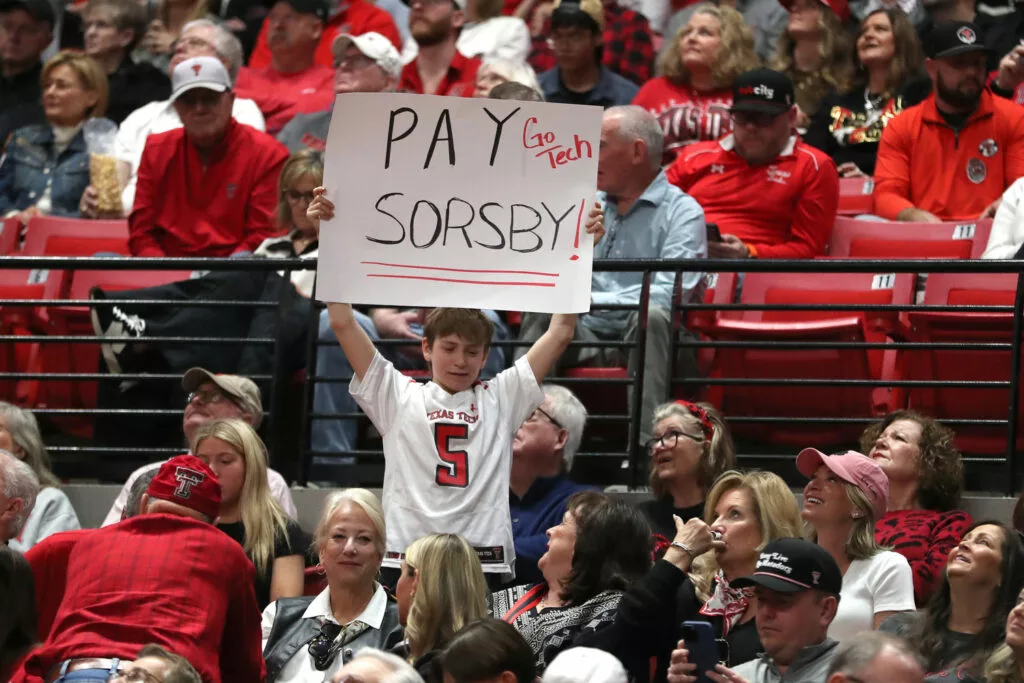
On Monday June 15, 2026, what seemed to be an ever-spiraling controversy surrounding scandal-ridden Texas Tech star quarterback Brendan Sorsby came to an end with widely-reported news about the player.
Sorsby elected to enter the NFL's supplemental draft just one week ahead of the deadline to make such a decision. Conflicting court rulings and mounting pressure on the entire Texas Tech athletic program became moot with Sorsby's decision.
Before transferring to Texas Tech for what would have been a $5 million signing bonus - the highest figure among this year's transferring players - Sorsby had been considered a potential first-round NFL draft pick, or at least no worse than a second-round selection. With at least a half-dozen NFL teams not appearing to have solved their quarterback woes, Sorsby is projected at a similar level in the supplemental draft.
The NFL hasn't run a supplemental draft since 2023, and no one has been selected since 2019. The last quarterback to enter the supplemental draft was Terrelle Pryor, a third-round bid in 2011 for the Las Vegas Raiders franchise that was then based in Oakland, CA.
The new lawsuit goes away
Just hours before Sorsby's decision, the Big 12 conference - which actually consists of 16 universities primarily located in the Southwest - announced it had sued league member Texas Tech in federal court.
The league sought a declaratory judgment and an injunction that, if granted, could have prevented the Red Raiders from playing Sorsby in conference games this fall.
In the 47-page complaint, the league sought to protect its right to prevent anyone - including Texas Attorney General Ken Paxton - from attempting to "deter, coerce, prevent, or punish the Big 12 for exercising its rights under its Bylaws" against gambling.
While the start of the college football season is months away, there was an urgency for Sorsby nonetheless, due to the deadline to declare for a supplemental draft.
Sorsby had been pursuing legal avenues that would enable to stay for another college season, potentially further boosting his appeal to NFL teams before the April 2027 main draft.
The risk for Sorsby was that if a recent court ruling favorable to him was reversed, he might not have been able to play at either the college or pro level this fall.
Related Articles
The stunning previous ruling
The new lawsuit had come just one week after an unexpected ruling by Tarrant County, Texas Judge Ken Curry that voided the NCAA's ban on Sorsby due to his acknowledgement that he had wagered nearly $100,000 on college and professional sports during his four years in college.
The fact that more than three dozen of the bets were made on the Indiana University football team while Sorsby was a member of that school as a freshman - while not yet of legal age to wager on any sporting events - seemingly doomed his legal case.
Betting on games involving one's own team has long been considered a bright red line that no U.S. athlete can ever cross. The conference's lawsuit even referred to the 1919 "Chicago Black Sox" baseball scandal and Cincinnati Reds manager Pete Rose's betting on his team.
While Rose and White Sox outfielder "Shoeless" Joe Jackson are among the best players in baseball history, both were banned for life for their actions - and neither has ever been chosen for the Baseball Hall of Fame as a result.
But Curry had concluded that Sorsby "would suffer irreparable injury" to his chances of a professional football career if he was barred from playing for Texas Tech in 2026.
Curry referred to elite coaching, training resources, camaraderie, and regimen that only being a member of a Division I college football team can provide" as part of his rationale.
Sorsby was ordered by Curry to “commence and continue” counseling for his gambling disorder, to attend Gamblers Anonymous meetings, and to provide to the NCAA a monthly report regarding his compliance” with those conditions.
In a subsequent statement, Sorsby said that he was "grateful for the chance to rejoin my teammates. This opportunity comes with the responsibility to remain focused on my personal growth, the ability to learn from this experience, and to be able to use my situation to help others going forward."
Just hours after Curry's ruling, the NCAA filed its request for an "accelerated appeal."
"The NCAA strongly disagrees with the court's ruling in Sorsby's case and is deeply concerned about the damaging, far-reaching and broadly destabilizing ramifications of this outcome -- which undermines and corrupts the integrity of sports," the organization said in a statement.
ESPN reported that an unnamed Big 12 athletic director said they were "disgusted" while adding: "We officially lost our soul."
Texas Christian coach Sonny Dykes - whose alma mater of Texas Tech was in the center of the storm - declared: "How is anyone ever going to trust the outcome of a game again?"
Even if Sorsby had ultimately prevailed in court, he would have to sit out the team's first two games - the Sept. 5 opener against Abilene Christian and also a contest a week later against Oregon State, another non-league opponent that will be a heavy underdog against Texas Tech even without Sorsby. The judge granted that stipulation that had been made by Sorsby's attorneys.
Sorsby spent two years at Indiana and two more at the University of Cincinnati. After transferring to Texas Tech for what would have been a final collegiate season, in April 2026 he checked into a residential gambling treatment program.
Charlie Baker, the NCAA president, publicly asked Congress to step in to prevent the state court judge's ruling from being upheld.
No more far-reaching implications for the entire Texas Tech athletic program
The stakes in the case potentially were quite high for all Texas Tech athletes. Non-Big 12 Conference universities Georgia and Nebraska already had announced per their athletic directors that they would refuse to schedule events versus Texas Tech in any sport. The Big Ten, which includes Nebraska, reportedly had discussions about having all of its members follow suit.
The athletic directors at Big 12 members TCU and Kansas State had said that there has been talk among league members of refusing to play Texas Tech in football.
If that talk had led to a concrete decision, Texas Tech officials would have had to seriously consider if one player - no matter how talented - should be defended at the potential cost of harming the athletic futures of hundreds of students across numerous sports.
Sorsby had blossomed in his final season at Cincinnati, tying a school record with 36 touchdowns. That made him a coveted player in the NCAA's annual "transfer portal," and Texas Tech gained what, for a time, had seemed like a major prize recruit.
