Maryland Can’t Pass the Finish Line on Banning Sweepstakes Casinos for the Second Straight Year
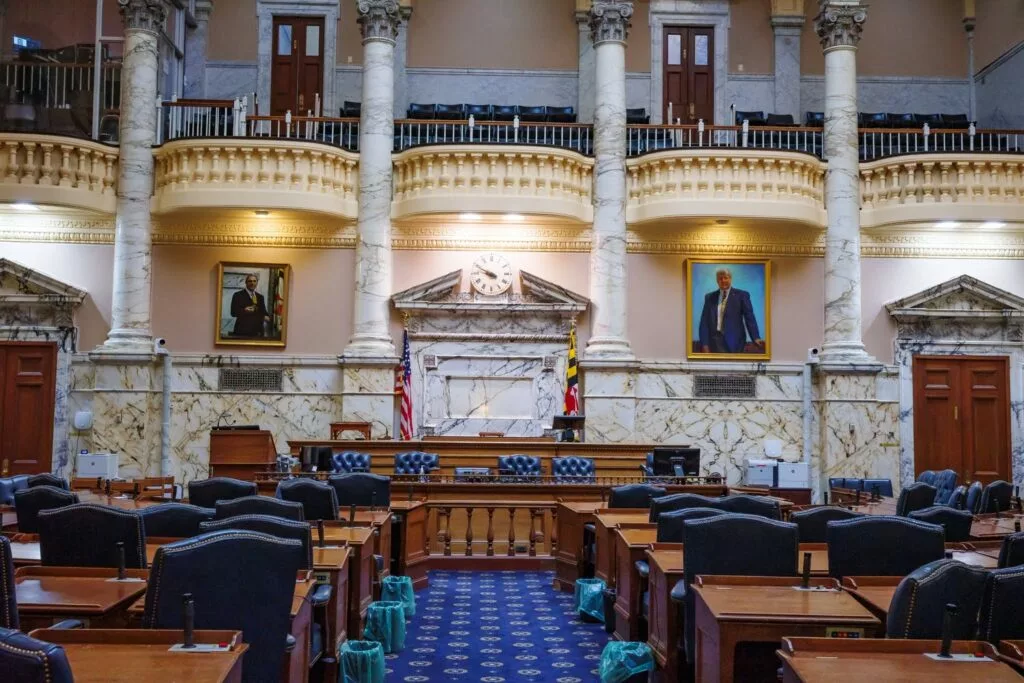
The 2026 legislative session in Maryland ended without a ban on sweepstakes casinos, making it the second straight year that efforts have failed. Despite a big push from the Senate and the Maryland Lottery and Gaming Control Agency (MLGCA), lawmakers must now go back to the drawing board and find a winning strategy.
On an ongoing basis, sweepstakes casino operators remain in a legal gray area, allowing them to continue doing business in Maryland in 2026.
Sweepstakes casinos have gone through the wringer in the United States over the last few years, and it doesn’t appear that will change in 2027. While the operators get some breathing room for the rest of the year, U.S. states are retooling their legal arsenals to ensure they can drive the final nail into the coffin of sweepstakes casinos next year.
The Rise of Sweepstakes Casinos in Maryland
Sweepstakes casinos first came onto the scene in the United States (including Maryland in limited fashion) back in 2012, using the dual-currency model to sidestep local gambling laws. However, it wasn’t until the COVID-19 era in the early 2020s that sweeps really took off in Maryland and across the country.
Sweepstakes Casinos Gain Traction in MD
While the world was in flux as the new decade began, sweepstakes casinos were able to operate under the radar. Over time, the operators began a heavy advertising campaign, gaining a larger customer base, and that momentum carried them for a while without pushback.
At its peak in 2022, dozens of operators were operating in Maryland. But that fun for everyone would hit a roadblock when a true moneymaking hero arrived for the state.
MD Legal Sports Betting vs. Sweepstakes Casinos
The argument that Maryland was caught off guard at first, as sweepstakes casinos began to gain traction, is valid. Around this time, Maryland was in the midst of legalizing both retail and online sports betting; retail betting went live at the end of 2021, while online betting launched at the end of 2022.
As time went on, major sportsbook and casino operators in Maryland started speaking out about sweepstakes casinos, claiming they were direct, unregulated competition for their new, thriving businesses. When the big moneymakers in the state started making some noise, the leadership finally had to take notice.
Regulatory Pressure: Cease-and-Desist Letters & Enforcement Actions
Maryland has been on a mission to eliminate sweepstakes casinos operating in the state, and they’ve done it in several creative ways. I think it’s safe to say that the days of platforms operating in the state will likely come to an uncomfortable end—one day.
MLGCA Comes C&D Letters, Warnings to Payment Processors
The MLGCA dug deep into sweepstakes casinos, sending numerous cease-and-desist letters to the major operators operating in the state. These notices targeted the major players in the game, and some even received more than one round of C&D letters for failing to comply.
In fact, the legal pressure wasn’t limited to sweepstakes casino operators. Payment processors were issued notices and warnings for handling the finances of “non-compliant” platforms. Maryland got this idea from other states, which effectively put some doubt in the minds of payment processors.
The results were mixed, in that some payment processors blocked Maryland-related transactions, while others didn’t budge an inch. As of June 2026, there are only 10 sweepstakes casino platforms still doing business in the state.
Limitations of Administrative Enforcement
Unfortunately, with no definitive law banning sweepstakes casinos or payment processors dealing with them, it has been an uphill battle for Maryland the entire time.
Maryland essentially tried scare tactics on the platforms, hoping they would cower in the face of “interpretive” language, rather than the actual word of law.
None of the sweepstakes casinos or payment processors faced any fines or legal trouble. However, some of the sweepstakes casinos left voluntarily in the face of the chaos and uncertainty Maryland currently faces. Some payment processors even have a notification on their platforms stating that they do not offer services in Maryland.
Related Articles
2025 Legislative Session: Success in the Senate, Not in the House
It has been a struggle for Maryland to get solid legislation across the finish line to ban sweepstakes casinos. But it started even before this current year, making the road ahead much more.
Senate Bill 860 Advances
The first shot in the war between Maryland and sweepstakes casinos came in 2025. Senator Paul Corderman sponsored Senate Bill 860 (SB 860), which sought to end the operation, conduct, and/or promotion of online sweepstakes games within the state. The bill also sought to give the MLGCA the power to deny or revoke any sweepstakes casino licenses.
Initially, SB 860 passed the Senate but fell short in the House. Despite not reaching its 2025 goal, Maryland felt confident that it gained enough momentum to make a bigger (and better) case against the sweepstakes casinos the next time around.
Why SB 860 Failed
While the Senate support was strong, SB 860 never even got a vote in the House. The bill was referred to the Ways and Means Committee, but no further actions were taken. In 2025, the legislative session ended with SB 860 getting no attention at all.
In reality, it was a hectic time for Maryland on the schedule with numerous pressing bills to be voted on. Not to mention, the laws weren’t clear enough to sort out in such a short time, and that was even a recent issue in Oklahoma, where sweepstakes casinos are still allowed to operate.
Second Failure: House Advances Bills, Senate Stalls in 2026
This year, Maryland took more calculated shots in hopes of banning sweepstakes casinos. It was a strong push, with bills making some headway, but it was the same story: 2025 didn't make it through the house.
House Bill 295 (HB 295)
The MLGCA requested a departmental bill to prohibit a person or company from “operating, conducting, or promoting interactive games” in Maryland.
In this version, House Bill 295 (HB 295) updated criminal law provisions, increased penalties, and designated the MLGCA as the lead oversight committee; it would be able to deny or revoke licenses here, just like in the previous attempt.
In March, the bill passed in the House on a commanding 105-24 vote.
House Bill 1226 (HB 1226)
House Bill 1226 (HB 1226) was called the “Maryland Illegal Online Gambling Enforcement Act” to target the sweepstakes casinos and dual-currency platforms.
This had the same prohibitions as HB 295. Still, it also empowered the Maryland Attorney General and prosecutors to issue cease-and-desist letters, seek injunctions, freeze accounts, and pursue civil and criminal damages against customers.
HB 1226 passed the House almost unanimously, 134-2.
Senate Bills: SB 112 & SB 652
Two Senate Bills (SB 112 & SB 652) were added as companions (one each) to HB 295 and HB 1226. Both bills had hearings in the Senate Budget and Taxation Committee, but that’s where the journey ended.
As for HB 295 and HB 1226, they advanced to the Senate before falling flat in the same fashion for the second consecutive year. The bills did not receive any committee votes or get a favorable report, and the clock ran out on the 2026 session.
Looking for Momentum in 2027
The Maryland Lottery & Gaming Control Agency and state lawmakers are licking their chops for the 2027 legislative session. After two somewhat promising efforts, there are plans to expand the scope of the lawful language further and piggyback on the success of HB 295 and HB 1226.
Currently, in June 2026, Maryland has no legal iGaming platforms, but efforts have been made through Senate Bill 761 (SB 761) and Senate Bill 885 (SB 885). Both bills stalled in the Senate Budget and Taxation Committee and are expected to be reintroduced in 2027.
For now, Maryland has legal online/retail sports betting and land-based casinos within its borders. It is certainly in the state’s best interest to keep those moneymakers with some form of protection around, much like Lamar Jackson gets from the Baltimore Ravens’ offensive line in the regular season.
They say slow and steady wins the race, and it appears that is the methodology Maryland is stuck with at the current moment. After two years of failed attempts, something has to give. Or, Maryland’s lawmakers can turn up the heat a notch or two with their efforts in the House and Senate.
Read More
